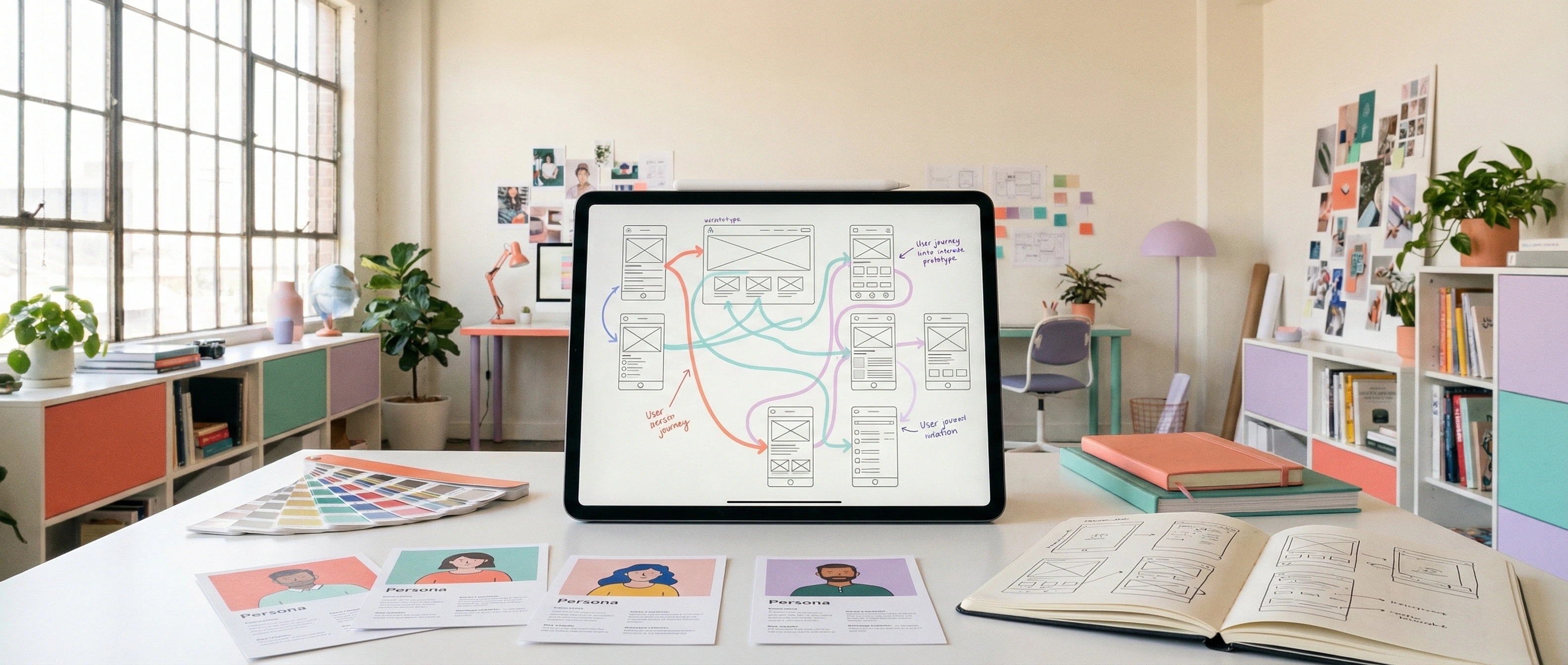
2. Build navigation around user behavior
Companies organize app navigation to mirror internal departments. Users think in tasks: "I want to pay my bill." Map the top 5 user tasks and make each achievable in 3 taps or fewer.
3. Show value immediately
Users who see an empty screen or lengthy onboarding won't come back. Pre-populate relevant content during onboarding. Ask for minimal information upfront — only what's needed to show something useful.
4. Use micro-interactions to communicate
Small animations and feedback tell users their actions registered. A button that changes color when tapped. A progress indicator during loading. Every user action should produce feedback within 100ms.
5. Build adaptive experiences
Not all users need the same interface. New users need guidance; power users need shortcuts. Track feature usage and progressively reveal complexity.
Frequently asked questions
How do we measure UX quality?
Track task completion rate, time-to-task, and error rate. These are more actionable than NPS scores.
Building or redesigning an app? We bring UX expertise to every project.