
Why most enterprise AI projects die before production
There's a gap between an impressive AI demo and a system that runs reliably at 2 AM when nobody's watching. We've spent the last decade building software for government agencies, healthcare providers, and financial institutions in Israel. The systems we build handle sensitive data, operate under strict regulatory constraints, and can't afford to hallucinate.
When we started applying AI to these environments, we quickly realized that wrapping a GPT API wasn't going to work. You can't connect a language model to a government healthcare system, cross your fingers, and hope it gives accurate answers. These environments need something fundamentally different.
What we mean by "Agentic AI"
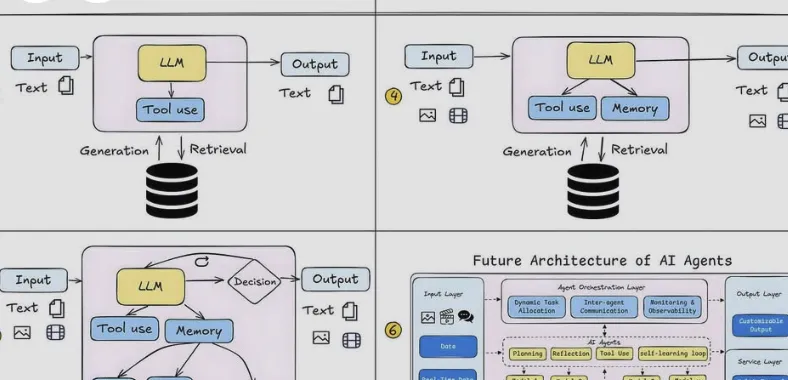
Agentic AI refers to AI systems built as goal-oriented agents that reason through multi-step tasks, interact with existing databases and APIs, and operate within security and compliance boundaries. Compare this to the typical chatbot approach: a single LLM call that generates a response with no context about the organization it's serving.
Our Agentic Framework is the infrastructure we built to make this work at scale. It handles three things that most AI implementations skip:
- Task orchestration — an agent breaks a complex request into steps, executes them in sequence, and adjusts if something fails mid-process.
- Two-way system integration — agents read from and write to existing enterprise systems (CRM, case management, document repositories) through secure API connections.
- Built-in compliance — permission models, audit logs, and regulatory constraints are part of the framework, not afterthoughts.
The framework itself is domain-neutral. We configure it for specific industries, but the core infrastructure handles the hard parts: state management, error recovery, and security.

Three systems running in production today
Psika.ai — legal research automation
At a Tel Aviv law firm, lawyers were spending 3-4 hours per case on precedent research alone. Psika breaks this into three specialized agents: one searches national legal databases for relevant rulings, another constructs argument structures based on Israeli law, and a third cross-references and summarizes decisions.
Result: 40% reduction in research time per case. The system doesn't replace legal judgment — it handles the information retrieval so lawyers can focus on strategy.
Bookmind — structured writing assistance
Bookmind helps authors work through structural problems in their writing. It maps narrative arcs, suggests chapter structures, and visualizes conceptual relationships between themes. What makes it different from text generators: it doesn't write for the author. It operates as an editorial collaborator, helping organize thinking without overriding voice.
One user described it as "sitting with an editor who never runs out of patience."
Zetra.ai — product documentation management
Product teams waste enormous time translating business requirements into technical specifications. Zetra automates this: it takes raw requirements, generates structured documentation, suggests features based on market data, and syncs everything with Jira and Git. It operates inside the existing workflow rather than as a separate tool.
Why these systems stay running
Three factors that keep our AI systems stable in production:
Domain-embedded teams. Our team working on a healthcare system includes people who understand clinical workflows and medical data regulations. The team building legal AI has legal domain experience. AI without domain knowledge generates confident garbage.
Full DevSecOps integration. AI systems need the same operational rigor as any production software: monitoring, incident response, failover procedures. We treat AI services as part of core infrastructure, not experimental add-ons.
Layered data governance. Sensitive data (medical records, legal case files, financial transactions) requires permission-based access controls and comprehensive audit trails. This is non-negotiable in the environments where our systems operate.
Frequently asked questions
How long does it take to deploy an agentic AI system? A typical implementation runs 3-6 months from requirements to production. The first month is heavily focused on understanding the domain and data landscape. Actual development usually starts in week 4-5.
Can agentic AI work with our existing systems? Yes, that's the point. Our framework is designed for integration with existing enterprise infrastructure — databases, APIs, document management systems, and workflow tools. We don't ask clients to replace their stack.
What happens when the AI makes a mistake? Every agent action is logged and auditable. For high-stakes decisions (medical, legal, financial), we build in human review checkpoints. The system flags uncertainty rather than guessing.
We work with organizations that need AI systems they can trust with sensitive operations. If that sounds like your situation, let's discuss what a production-grade implementation would look like.